Wednesday, 9 November 2016

Amicable

Wednesday 9th November 2016

Amicable - /ˈamɪkəb(ə)l/


Adjective
Characterised by friendliness and absence of discord.

Example sentences
Adjective
‘an amicable settlement of the dispute’
‘the meeting was relatively amicable’

Origin
Late Middle English (in the sense ‘pleasant, benign’, applied to things): from late Latin amicabilis, from Latin amicus friend.


Thanks to: www.oxforddictionaries.com

Tuesday, 8 November 2016

Inevitable

Tuesday 8th November 2016

Inevitable - /ɪnˈɛvɪtəb(ə)l/


Adjective
1a) Certain to happen; unavoidable.
1b) informal So frequently experienced or seen that it is completely predictable.

Noun    
A situation that is unavoidable.

Example sentences
Adjective
1a) ‘war was inevitable’
1b) ‘the inevitable letter from the bank’

Noun
‘by the morning he had accepted the inevitable’

Origin
Late Middle English: from Latin inevitabilis, from in- not + evitabilis avoidable (from evitare avoid).


Thanks to: www.oxforddictionaries.com

Monday, 7 November 2016

Disposition

Monday 7th November 2016

Disposition - /dɪspəˈzɪʃ(ə)n/

Noun    
1a) A person's inherent qualities of mind and character.
1b) [often with infinitive] An inclination or tendency.
2a) [mass noun] The way in which something is placed or arranged, especially in relation to other things.
2b) The action of arranging people or things in a particular way.
2c) The stationing of troops ready for military action.
3) Law 
[mass noun] The distribution or transfer of property or money to someone, especially by bequest.
4a) The power to deal with something as one pleases.
4b) archaic The determination of events by divine power.

Example sentences
Noun
1a) ‘a sweet-natured girl of a placid disposition’
1a) ‘he has the disposition of a saint’
1b) ‘the Prime Minister has shown a disposition to alter policies’
1b) ‘the judge's disposition to clemency’
2a) ‘the plan shows the disposition of the rooms’
2b) ‘the prerogative gives the state widespread powers regarding the disposition and control of the armed forces’
2c) ‘the new strategic dispositions of our forces’
3) ‘this is a tax which affects the disposition of assets on death’
4a) ‘if Napoleon had had railways at his disposition, he would have been invincible’
4b) ‘The first is that there are good reasons to think that there are irreducible dispositions in nature, and that where such dispositions are manifested, there are logically necessary casual connections.’


Origin

Late Middle English: via Old French from Latin dispositio(n-), from disponere arrange (see dispose).

Thanks to: www.oxforddictionaries.com

Friday, 4 November 2016

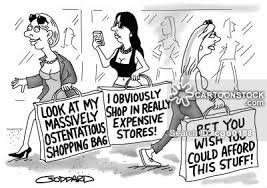
Ostentatious

Friday 4th November 2016

Ostentatious - /ˌɒstɛnˈteɪʃəs/

Adjective   
Characterised by pretentious or showy display; designed to impress.


Example sentences
Adjective
‘A simple design that is glamorous without being ostentatious’
‘It’s gaudy, it’s ostentatious, and it’s exactly what one would expect from a rockstar that thinks he’s God’


Origin 
None found

Thanks to: www.oxforddictionaries.com

Thursday, 3 November 2016

Holistic

Thursday 3rd November 2016

Holistic - /həʊˈlɪstɪk/


Adjective   
  1. Philosophy Characterised by the belief that the parts of something are intimately interconnected and explicable only by reference to the whole.
  2. Medicine Characterised by the treatment of the whole person, taking into account mental and social factors, rather than just the symptoms of a disease.


Example sentences
Adjective
‘These two books bring a holistic approach to the analysis of transport and transport networks’
‘They offer a holistic approach to cancer care, which helps the whole family, not just the sufferer’

Origin
The word holistic was coined in 1926 by Gen. J.C. Smuts (1870-1950) and is based on the Greek root holos, which means 'whole'. The theory of holism refers to the theory that regards nature as consisting of wholes.


Thanks to: www.oxforddictionaries.com

Wednesday, 2 November 2016

Jerk

Wednesday 2nd November 2016

Jerk - /dʒəːk/

Noun  
1.    A quick, sharp, sudden movement.
2.    A spasmodic muscular twitch.
3.    Weightlifting The raising of a barbell above the head from shoulder level by an abrupt straightening of the arms and legs, typically as the second part of a clean and jerk.
4.    informal A contemptibly foolish person.

Verb
[With adverbial of direction] Move or cause to move with a jerk.
[No object] ‘The van jerked forward’
[With object] ‘She jerked her chin up’
Figurative ‘the thud jerked her back to reality’
Weightlifting [with object] Raise (a weight) from shoulder level to above the head.

Example sentences
Noun
‘He gave a sudden jerk of his head’
‘You may have muscle jerks or pins and needles in one arm or leg’
‘Begin your sessions with exercises like deadlifts, squats, clean and jerks, and bench presses’
‘He’s got to be the biggest jerk in the whole world’

Origin
Mid 16th century (denoting a stroke with a whip): probably imitative.


Thanks to: www.oxforddictionaries.com

Tuesday, 1 November 2016

Sarcastic

Tuesday 1st November 2016

Sarcastic - /sɑːˈkastɪk/


Adjective
Marked by or given to using irony in order to mock or convey contempt.

Example sentences
Adjective
‘Making sarcastic comments’
‘I think they're being sarcastic’

Origin
Late 17th century: from French sarcastique, from sarcasme (see sarcasm), on the pattern of pairs such as enthousiasme, enthousiastique.


Thanks to: www.oxforddictionaries.com